

Ever grabbed a necklace that says "S925" and wondered what the letters actually mean? You're not alone—most first‑time online shoppers hit that little mystery and pause. In plain terms, S925 means the piece is made of sterling silver that's 92.5% pure silver, mixed with 7.5% other metals (usually copper) to give it durability.
Think about that moment when you spot a sleek pendant on Nina‑Bazaar and imagine it lasting through daily wear, not just a pretty accessory for a night out. That durability comes from the copper alloy, which prevents the soft pure silver from bending or scratching too easily. For example, a customer who bought a simple S925 chain last summer still reports it looking bright after months of commuting and coffee spills.
Now, why does the “S” matter? In many markets, especially online, sellers might label pieces just "925" or even "silver‑plated" to sound fancy. The "S" clarifies that the item truly meets the sterling standard, not a thin coating. This distinction matters for budget‑conscious shoppers who want genuine value without paying extra for a fake claim.
Here's a quick way to verify: look for a hallmark stamp—usually "925" or "S925"—on the clasp or pendant. If the mark is missing, ask the seller for proof. In our experience, the most reliable pieces on Nina‑Bazaar come with clear stamping and a short description confirming the metal composition.
And if you’re still curious about the meaning behind the hallmark, you can read a community discussion that breaks it down in everyday language. Check out this post that explains the basics of silver markings: 925 sterling silver meaning. It’s a friendly rundown that even a beginner can follow.
So, what should you do next? When you shop, make a habit of inspecting the stamp, confirming the S925 label, and asking about care tips. A little extra attention now saves you from disappointment later, and you’ll enjoy a piece that truly shines.
TL;DR
S925 means the piece is 92.5% pure silver alloyed with copper, giving you genuine sterling quality without costly plating tricks.
Check the hallmark—look for ‘925’ or ‘S925’ on the clasp—and trust Nina‑Bazaar’s stamped pieces for lasting shine that fits your budget, and enjoy peace of mind every day with confidence.
What Does S925 Mean? Understanding the Hallmark
Ever held a pendant and thought, "Is this really solid silver or just a trick?" That split‑second doubt is what the S925 hallmark clears up. The "S" tells you the piece meets the full sterling standard – 92.5% pure silver alloyed with a touch of copper for strength.
Why does that matter? Pure silver is buttery soft; it bends, scratches, and loses shape fast. By adding about 7.5% copper, the metal becomes tough enough for everyday wear – think commuting, coffee spills, and the occasional accidental bump.
Spotting the Hallmark in Real Life
The hallmark usually lives on the clasp, pendant backing, or inside a ring band. Look for "925" or "S925" stamped clearly. If it’s fuzzy or missing, ask the seller for proof. On Nina‑Bazaar we make it easy – every sterling piece ships with a crisp stamp and a short description confirming the metal.
Want a quick visual guide? Check out this community post that breaks down the markings in plain language: 925 sterling silver meaning. It’s a friendly walk‑through that even a first‑time buyer can follow.
Now, imagine you’re picking a gift for a friend who loves minimalist style. You find a sleek S925 square pendant on Nina‑Bazaar. Because it’s true sterling, you know it won’t tarnish after a few weeks of daily wear – and that peace of mind is priceless for budget‑savvy shoppers.
What the Hallmark Doesn’t Tell You – Care Tips
Even the best‑crafted sterling needs a little TLC. Store pieces in a soft pouch, avoid harsh chemicals, and give them a gentle polish with a silver cloth every few months. This keeps the copper alloy from reacting with air and turning dark.
And if you’re wondering about styling, sterling silver pairs beautifully with both casual tees and formal dresses. It’s versatile enough to be the base for layered necklaces or the solo star of an evening look.
Speaking of pairing, many of our customers love to complement their jewellery with a stylish drink bottle for on‑the‑go hydration. Check out Quench Bottles for premium custom bottles that make a great gift alongside a sterling piece.
Another natural cross‑sell is a beauty boost. A fresh‑faced look pairs perfectly with a gleaming silver pendant. Explore makeup options at RedINK Cosmetics for a complete fashion‑beauty package.
Here’s a quick checklist you can keep on your phone when you shop:
- Look for "S925" or "925" stamped on the clasp or backing.
- Verify the seller’s description mentions 92.5% pure silver.
- Ask about care instructions – a good retailer will provide them.
- Consider complementary gifts like a custom bottle or makeup set.
And if you’re a visual learner, this short video walks you through how to inspect a hallmark on different jewellery pieces.
After watching, you’ll feel confident spotting the S925 stamp in any store – online or brick‑and‑mortar. Remember, the hallmark is your guarantee of quality, not a marketing gimmick.
So next time you see that tiny "S925" on a necklace, you’ll know it means you’re holding genuine sterling silver that’s built to last, looks great, and fits right into a thoughtful gift package.
How S925 Sterling Silver Is Made: From Raw Material to Finished Piece
When you click “add to cart” on a sleek S925 pendant, you might wonder what actually happened to that shiny piece before it reached your screen. Spoiler: it started its life buried deep in the earth, not in a designer’s studio.
First, miners locate silver‑rich ore—usually as a by‑product of copper or lead extraction. The raw rock is crushed, mixed with water and chemicals, and then floated so the heavier waste sinks while silver‑laden sulfide rises to the surface. What you end up with is a semi‑pure “doré” bar that still contains bits of copper and gold.
That doré bar heads to a smelter where it’s heated past 960 °C (the melting point of pure silver). Copper is added at a precise 7.5 % ratio, bringing the alloy up to the legal 92.5 % silver standard we all know as “925”. This copper not only boosts strength but also gives the metal a slightly warmer hue that makes everyday wear less prone to denting.
From molten metal to a digital design
Once the alloy is molten, it’s poured into ingots and then rolled into thin sheets or drawn into wire, depending on the intended jewelry type. Meanwhile, designers sketch the piece—often on paper, then translate the sketch into a CAD file. The digital model lets a factory preview every curve, ensuring the final product will fit both aesthetic and manufacturing constraints.
Imagine a habit‑shopping customer eyeing a delicate chain. The CAD file of that chain is fed into a CNC‑milling machine that carves a tiny wax replica, layer by layer. This wax model captures even the tiniest filigree details before the real metal ever sees the light.
Lost‑wax casting: the magic step
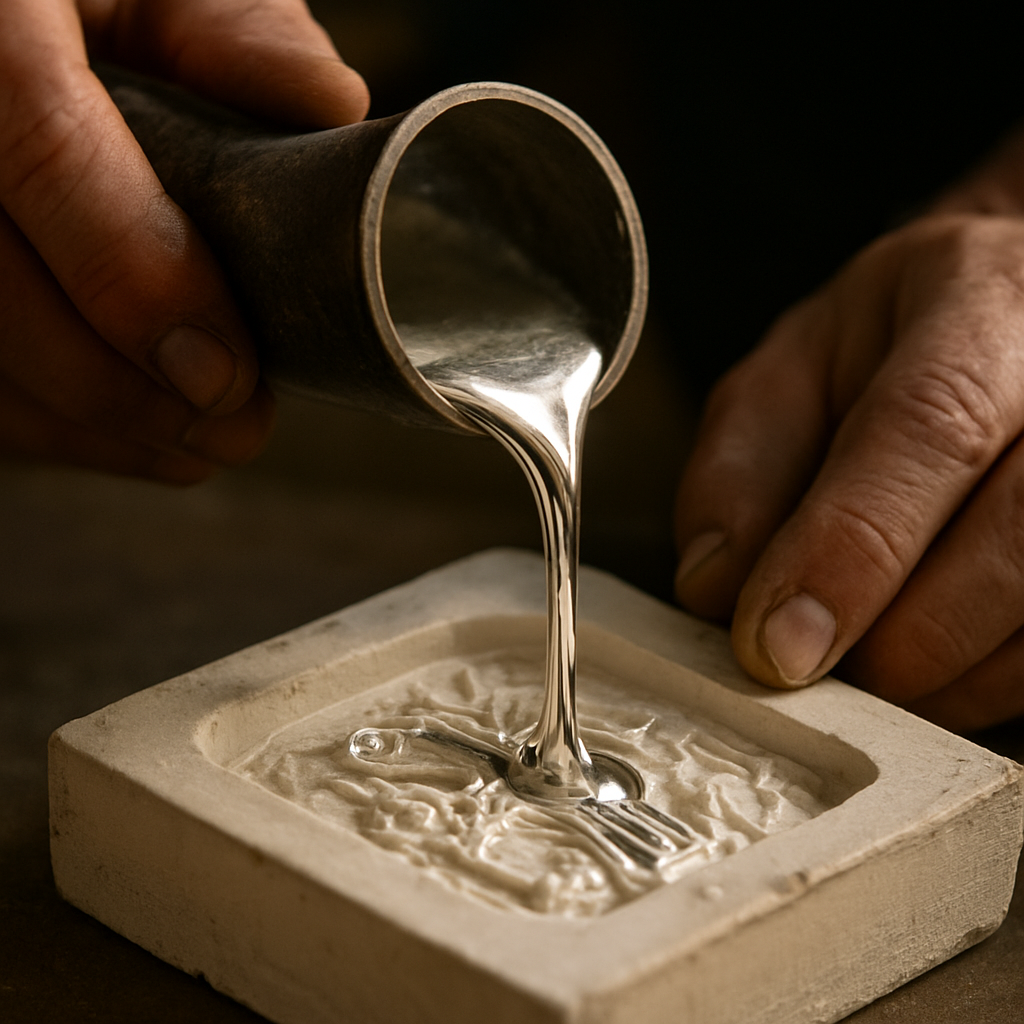
Next comes the classic lost‑wax method. The wax model is placed inside a plaster mold; the whole assembly is heated so the wax melts away, leaving a perfect negative cavity. Molten S925 alloy is then poured into that cavity. As it cools, the metal takes on every groove and engraving the wax once had.
When the plaster breaks away, you have a rough silver “master” that looks exactly like the final piece—except it’s still a bit rough around the edges.
From here, skilled silversmiths hand‑file, sand, and polish each piece. They’ll also solder any additional findings, like a clasp or gemstone setting, using a lower‑melting‑point silver alloy so the main body isn’t compromised.
After the piece is fully assembled, it goes through a multi‑stage polishing line—coarse buffers first, then finer ones, and finally a soft buff that brings out that mirror‑like shine we all love. This polishing not only looks good; it also seals micro‑scratches that could otherwise accelerate tarnish.
Quality checkpoints you can trust
Every batch is inspected for consistency. A simple magnet test confirms there’s no stray ferrous material, while a weight comparison helps spot hollow‑filled knock‑offs. Finally, the hallmark “S925” is stamped onto the clasp or back of the item, giving you a visual guarantee that the piece meets the sterling standard.
For a deeper dive into each step, check out this detailed silver manufacturing process. It walks through the entire journey from ore to the polished pendant you’ll soon wear.
So, what does this mean for you as a first‑time buyer? Knowing the steps lets you spot red flags—like a missing hallmark or an unusually light piece—and feel confident that your Nina‑Bazaar purchase really is solid S925 sterling silver.
Next time you admire that shimmer in the mirror, remember the underground trek, the high‑heat furnace, the CAD file, and the careful hands that turned raw ore into a piece you can wear every day.
Key Characteristics of S925 Sterling Silver vs. Other Metals
Ever wondered why that S925 pendant feels a little different from a stainless‑steel cuff you see on the shelf? It’s not just the shine – the metal itself behaves in ways that can make or break your everyday wear experience.
What’s under the surface?
S925 sterling silver is 92.5% pure silver with 7.5% copper (or occasionally zinc) added for strength. The copper gives it a warm hue and a bit of bite, so the piece won’t bend as easily as pure silver.
By contrast, stainless steel is an alloy of iron, chromium (about 10‑20%), and sometimes nickel or titanium. Those extra elements create a protective oxide layer that resists rust and scratches.
Gold‑filled wire, on the other hand, is a thick layer of real gold mechanically bonded to a brass core. It’s far heavier and considerably more rigid than either S925 or steel.
Durability and everyday wear
If you’re a first‑time buyer who plans to wear a necklace to work, on a coffee run, and maybe even while jogging, you’ll want something that can survive a bit of friction. Stainless steel wins the raw‑scratch test – it’s practically unscorable. S925 silver, thanks to its copper alloy, is softer but still holds up well for daily use, especially when you handle it with care.
According to Bogart’s comparison of stainless steel and sterling silver, sterling silver offers “more elegance and malleability for intricate designs” while stainless steel “provides enhanced durability and a longer lifespan”. That’s why you’ll see delicate filigree pieces in S925 but chunky, sporty bangles in stainless steel.
Tarnish, maintenance, and value
Silver reacts with sulfur in the air, forming a thin black layer we call tarnish. The copper in S925 actually speeds up that reaction a bit, so you’ll need a regular cleaning routine – a soft cloth after each wear and a monthly soak in mild soapy water.
Stainless steel, being chromium‑based, practically never tarnishes. It’s also hypoallergenic for most people, though a tiny percentage react to nickel.
From a value perspective, S925 silver holds intrinsic metal value – it’s a precious metal. Stainless steel is a commodity metal with virtually no resale value. That’s why a well‑made S925 piece can feel like a small investment, while a steel bracelet is more of a fashion accessory.
Weight and feel
Because silver is less dense than steel, S925 jewelry feels lighter on the ear or neck. If you love that barely‑there sensation, you’ll appreciate the feather‑light quality of a silver earring versus the solid thump of a steel stud.
Gold‑filled pieces, with a brass core, sit somewhere in between – heavier than silver but still comfortable for many.
Real‑world scenarios
Imagine you’re a habit‑shopping customer looking for a pair of earrings to wear to a virtual meeting and a weekend garden party. You pick S925 studs because the copper alloy lets the design stay delicate yet sturdy enough for a day of movement. A week later, you notice a faint dark line on the metal – that’s normal tarnish, and a quick polish restores the sparkle.
Now picture a colleague who prefers a stainless‑steel chain because they work in a kitchen and fear any metal reacting with food or getting scratched. Their chain never loses its gloss, but it also lacks the subtle warm tone of silver.
Quick decision table
| Feature | S925 Sterling Silver | Stainless Steel | Gold‑Filled |
|---|---|---|---|
| Durability (scratch resistance) | Good, but can scratch with hard surfaces | Excellent, highly scratch‑resistant | Moderate – depends on thickness |
| Tarnish propensity | Yes – requires regular cleaning | Negligible | Low – gold layer protects core |
| Intrinsic value | Precious metal – resale potential | None | Higher than steel, lower than solid gold |
Actionable steps for confident buying
1. Zoom in on the hallmark. In the Jewellery and Watch collection, you’ll see the “S925” stamp on the clasp or back of each piece.
2. Ask about the alloy. If the seller can’t confirm the copper percentage, walk away – that’s a red flag.
3. Perform a quick magnet test. Neither silver nor gold‑filled pieces should attract a magnet; steel will.
4. Plan a simple maintenance routine. Wipe with a microfiber cloth after each wear, and give the piece a gentle soak in warm soapy water once a month.
5. Store smart. Keep each item in an anti‑tarnish pouch or a zip‑lock bag with a silica packet to control humidity.
By weighing these characteristics against your lifestyle – whether you’re commuting, attending a formal event, or gifting a loved one – you can choose the metal that feels right in your hand and lasts in your wardrobe.
Buying Guide: Spotting Authentic S925 Silver Jewelry
Ever wonder if that shiny pendant you just added to the cart is truly S925?
You’re not alone – first‑time buyers often hit a pause when the hallmark looks like a tiny secret code.
Let’s walk through a quick, no‑stress checklist that turns that doubt into confidence, so you can click “Buy” without second‑guessing.
Step 1 – Find the hallmark
The S925 stamp is the gold standard. Look for it on the clasp, the back of a ring, or inside a pendant’s bail. The letters should be crisp, not fuzzy.
If the mark is missing, ask the seller for a close‑up shot. A reputable shop like Nina‑Bazaar usually has clear product photos that show the hallmark.
A quick visual tip: the “S” before the numbers signals “sterling,” a small extra layer of accountability.
Step 2 – Magnet test
Grab a small fridge magnet. Real S925 silver won’t be pulled toward it. If it sticks, you’re probably looking at a plated base or steel.
Remember, a very weak magnet might miss a hidden core, so use a strong neodymium piece or the magnet from a hardware store.
If the piece has gemstones, wrap the magnet in a soft cloth first – you don’t want to scratch delicate settings.
Step 3 – Observe tarnish
Authentic silver develops a subtle dark patina over time. That natural tarnish is actually a good sign; fake “silver” often stays stubbornly bright.
A quick test: rub a soft cloth over a hidden spot. If the surface darkens slightly, you’re likely holding real S925.
Step 4 – Weight check
Solid S925 feels a bit heavier than a hollow‑filled imitation of the same size. Pick up the piece; it should have a pleasant, solid heft.
If it feels feather‑light, double‑check the hallmark and magnet results before you commit.
Step 5 – Verify the seller
Buying online adds a layer of trust. Look for stores that list detailed metal specifications, return policies, and clear customer‑service channels.
A recent guide on spotting genuine S925 silver recommends purchasing from sellers who openly share their stamping process – a point echoed by industry experts.
Helios Global outlines simple tips to recognize real S925 silver, and they line up perfectly with our checklist.
Step 6 – Safe online purchase
Even with all the checks, you still want a secure checkout. Nina‑Bazaar encrypts payment data and offers a hassle‑free return if the item doesn’t match the description.
Trusted online silver retailers note that buying silver online is safe when you stick to trusted retailers that provide clear quality indicators.
Putting it all together
So here’s a quick cheat sheet you can keep on your phone: hallmark present? → magnet test passes? → slight tarnish? → weight feels right? → seller is reputable?
If you answer “yes” to every bullet, you’ve got a genuine S925 piece ready to become your everyday favourite.
And if anything feels off, it’s okay to walk away. Better to wait for a piece that checks all the boxes than to regret a cheap knock‑off later.
Finally, treat your new silver with love: a soft microfiber cloth after each wear, a monthly soak in warm soapy water, and storage in an anti‑tarnish pouch.
Those tiny habits keep the copper alloy from reacting too quickly, so the shine stays fresh for years.
Caring for S925 Sterling Silver: Maintenance Tips
You’ve just added a gorgeous S925 pendant from Nina‑Bazaar to your cart, and the excitement is real. But the moment you slide it on, a tiny black spot appears a week later and you wonder, “Did I do something wrong?” The good news? Caring for S925 silver is easier than you think once you know the chemistry behind the tarnish.
First, remember that S925 isn’t pure silver – it’s 92.5% silver alloyed with 7.5% copper. That copper is what gives the metal strength, but it also loves to react with sulfur in the air, forming a thin layer of silver sulfide that we call tarnish.
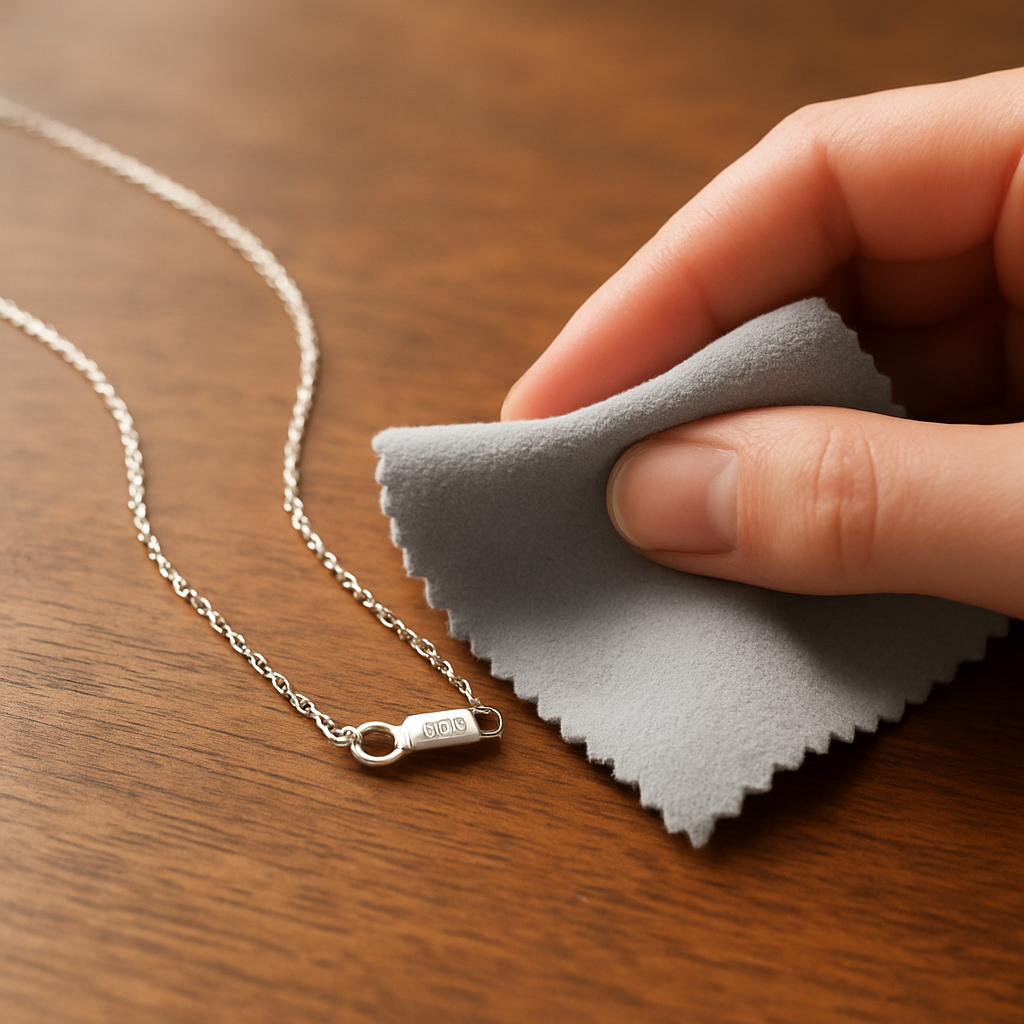
So, what’s the simplest daily habit? After each wear, give the piece a quick swipe with a soft microfiber cloth. The cloth lifts away skin oils and moisture before they have a chance to bond with sulfur. It only takes a few seconds, and you’ll notice the shine staying brighter longer.
If you’re a first‑time buyer who loves a morning coffee, try this: put your jewelry on after you’ve finished your coffee and any splashy latte art. That way the metal isn’t exposed to acidic liquids right away. It’s a tiny timing tweak that makes a big difference.
Now let’s talk about the weekly deep‑clean. Fill a bowl with lukewarm water, add a few drops of mild dish soap, and let your silver soak for about five minutes. Gently agitate, then rinse under running water and pat dry with a lint‑free cloth. This routine is recommended by jewellery experts and matches the advice in a guide to cleaning 925 sterling silver at home.
For stubborn tarnish that refuses to budge, avoid harsh chemicals like bleach or ammonia. Instead, create a paste of baking soda and water, apply with a soft toothbrush, and rinse promptly. The mild abrasion lifts the silver sulfide without scratching the underlying alloy.
But why does this happen in the first place? A short read from Forsythe Jewelers explains that sulfur‑containing gases from everyday items – hairspray, perfume, even rubber bands – accelerate the reaction. Understanding the cause helps you control the environment.
Practical storage tip: keep each piece separate in an anti‑tarnish pouch or a zip‑lock bag with a silica packet. If you don’t have a pouch, a piece of chalk tucked in the bag absorbs excess moisture, a trick many jewelers swear by.
Here’s a quick checklist you can paste on your fridge:
- Wipe with a microfiber cloth after every wear.
- Soak weekly in warm, soapy water for five minutes.
- Dry thoroughly with a lint‑free towel.
- Store in an airtight pouch or zip‑lock bag with silica or chalk.
- Avoid direct contact with cosmetics, perfume, and chlorine.
- Keep away from rubber or latex bands that release sulfur.
Let’s run through a real‑world scenario. Imagine you’re a habit‑shopping customer who wears the same S925 chain to work, gym, and weekend brunch. You follow the daily wipe, soak it Sunday night, and store it in a pouch on the bathroom shelf. After three months the metal still looks like day one – no dark patina, no loss of shine.
If you ever notice a faint yellow‑brown film, that’s the early stage of tarnish. Don’t panic – a quick polish with a dedicated silver cloth restores the original luster instantly. The key is to act before the layer thickens into the black sulfide.
A common mistake is to put silver in the dishwasher. The high‑temperature water and detergent can strip the protective layer and even cause micro‑scratches. Stick to hand‑washing or the simple soak method we described.
Travel tip: when you’re on the go, wrap your favorite earrings in a small zip‑lock bag with a silica packet. It takes up almost no space in your carry‑on, and you’ll return home to pieces that still sparkle.
Finally, remember that regular wear actually helps. The natural oils on your skin create a thin protective barrier that slows oxidation. So don’t be afraid to wear your silver daily – just finish with that quick cloth swipe.
S925 Sterling Silver in Fashion Trends 2024
If you’re scrolling through our 2024 lookbook and wonder why S925 silver keeps popping up, you’re not alone.
The metal isn’t just a fallback for gold‑filled pieces; it’s become the runway’s quiet hero this season.
Why? Because designers are chasing that perfect mix of shine, flexibility, and affordability that S925 delivers.
Think about the street‑style snap you saw last week – a layered chain set with a dainty pendant, all in gleaming silver.
That look works because the copper alloy lets the chain stay supple, while the high polish catches the light without looking gaudy.
Metal‑forward minimalism
Minimalist aesthetics dominate 2024, and they need a metal that can be thin yet sturdy.
S925’s 7.5% copper gives it just enough bite to hold ultra‑slim bars and mesh without warping.
First‑time buyers love the feather‑light feel; you can wear a stack of three bracelets and barely notice the weight.
At Nina‑Bazaar we’ve seen that habit‑shopping customers often pick a simple S925 cuff as a daily staple, then layer it with a bolder piece when the occasion calls for drama.
Colour‑shifting trends
Designers are playing with oxidised finishes, brushed surfaces, and even hammered textures.
Because S925 reacts predictably to intentional patina, creators can control the depth of that vintage look without compromising durability.
A quick example: a matte‑finished S925 pendant paired with a polished chain gives a contrast that feels both modern and timeless.
If you’re a reasonable‑price shopper, you’ll appreciate that the same alloy can be finished in multiple ways, keeping the cost low while the style feels premium.
Sustainable style
Eco‑conscious shoppers are looking for metals that can be recycled indefinitely.
Silver is 100 % recyclable, and because S925 pieces are often made from recycled scrap, the environmental footprint stays tiny.
That’s why we see more ‘up‑cycle’ collections this year – designers source reclaimed S925 and turn it into fresh, on‑trend jewellery.
You can feel good wearing a piece that not only looks good but also aligns with a circular‑fashion mindset.
Mix‑and‑match versatility
One of the biggest trends in 2024 is mixing metals within a single outfit.
Silver pairs effortlessly with rose gold, yellow gold, and even blackened oxidised pieces, creating a curated ‘mixed‑metal’ vibe.
Because S925 doesn’t tarnish as quickly as pure silver, you can wear it alongside other metals for weeks without a noticeable dullness.
A habit‑shopping customer might wear a S925 chain with a brass watch and a gold‑filled ring, then swap the chain for a leather cord on a weekend adventure.
Statement pieces for the bold
While minimalist chains dominate, there’s also a surge in bold, sculptural S925 designs.
Think oversized cuffs, geometric pendants, and chunky chains that command attention.
The alloy’s strength lets designers push thickness without the piece feeling clunky, which is perfect for the ‘power‑dressing’ look that’s trending in boardrooms and brunches alike.
If you’re a first‑time buyer nervous about breaking a heavy piece, remember that S925’s copper core actually absorbs minor impacts, keeping the finish intact.
Practical style tips
Here’s a quick cheat‑sheet you can use tomorrow:
- Choose thin, layered chains for a minimalist vibe – the alloy stays flat and won’t kink.
- Opt for brushed or oxidised finishes when you want low‑key glam that ages gracefully.
- Mix S925 with one other metal for a curated look – the contrast keeps things fresh.
- For a statement piece, go for a geometric cuff; the strength of S925 prevents bending.
- Store each item separately in an anti‑tarnish pouch to keep the shine longer.
These tiny habits let you enjoy the trend without the hassle of constant polishing.
And remember, regular wear actually creates a subtle protective layer of skin oils, so your S925 jewelry looks better the more you use it.
So, what should you do next?
Head to our new‑items collection, spot the pieces that match the 2024 trends, and let your personal style shine in silver.
FAQ
What does the “S925” stamp actually mean on a piece of jewelry?
The “S925” hallmark tells you the metal is sterling silver – 92.5% pure silver mixed with 7.5% copper or a similar strengthening alloy. The “S” stands for “sterling,” adding a layer of accountability beyond a plain “925” mark. In other words, you’re looking at a piece that meets legal standards for purity, so you can trust its durability and intrinsic value.
How can I tell if a necklace is genuine S925 sterling silver?
First, locate the tiny stamp on the clasp or the back of the pendant – it should read “S925” and be crisp, not fuzzy. Next, do a quick magnet test; real S925 won’t be attracted to a magnet. Finally, compare the weight – solid silver feels a bit heftier than a hollow‑filled knock‑off. If anything feels off, ask the seller for a close‑up photo of the hallmark.
Will S925 silver tarnish, and how can I prevent it?
Yes, S925 will develop a thin dark film over time because the copper alloy reacts with sulfur in the air. The good news is that regular care keeps it looking fresh. Wipe each piece with a soft microfiber cloth after wear, soak it weekly in warm, soapy water for a few minutes, and store it in an anti‑tarnish pouch with a silica packet. Those tiny habits stop the film before it gets stubborn.
Is S925 safe for people with metal allergies?
Most people with nickel‑sensitive skin find S925 comfortable, because the alloy is primarily silver and copper. However, a small percentage react to copper, especially if they have a broader metal allergy. If you’ve had reactions to other copper‑based items, test a small, hidden area of the jewelry first or choose a hypoallergenic coating. In practice, many first‑time buyers wear S925 without any issues.
Can I mix S925 silver with other metals in my outfit?
Absolutely – mixing metals is a 2024 trend that adds visual interest. Pair a S925 chain with a rose‑gold watch or a gold‑filled ring, and the contrast feels intentional rather than clashing. Because S925 doesn’t tarnish as quickly as pure silver, you can wear it alongside stainless steel or brass for weeks without one piece looking dull. Just keep each item stored separately to avoid scratches.
How does the price of S925 compare to other precious metals?
S925 sits between pure silver and higher‑value metals like gold or platinum. It’s more affordable than solid 925 silver because the copper alloy reduces material costs, yet it still carries intrinsic metal value you can’t get from costume jewelry. For first‑time buyers hunting a reasonable price, S925 offers the look of fine jewelry without the premium price tag of 18k gold or platinum pieces.
What should I do if my S925 piece gets a dent or bend?
Don’t panic – S925’s copper component actually gives it a bit of flexibility, so minor dents can often be gently reshaped at home. Use a soft cloth and your fingers to press the bend back into place, or place the piece on a flat surface and lightly tap it with a wooden mallet. For more serious damage, bring it to a reputable jeweller who can re‑solder or recast the affected area.
Conclusion
After walking through the chemistry, the buying checklist, and the everyday care routine, you probably still wonder—what is s925 sterling silver really worth to you?
In a nutshell, it’s a blend of 92.5% pure silver and a dash of copper that gives you shine, durability, and a price tag that feels honest. That’s why first‑time buyers on Nina‑Bazaar can snag a piece that looks like fine jewellery without breaking the bank.
Think about the last time you wore a silver pendant to a coffee meeting, then later to a weekend hike. The metal stayed bright, the clasp stayed solid, and you didn’t have to panic over a sudden tarnish storm. That everyday confidence is the real payoff of knowing what s925 sterling silver is made of.
So, what’s the next step? Grab a piece that shows the “S925” hallmark, run the quick magnet test, and give it a gentle wipe after each wear. You’ll notice the metal holding its sparkle longer, and you’ll feel good about the value you’re getting.
Remember, the best accessory is one that works with your routine, not against it. Keep these simple habits, and your S925 jewellery will stay a reliable sidekick for years to come.


