

Picture this: you're strolling through a bustling market in Marrakech, the sun is warm, the scents of spices swirl around you, and suddenly you feel that familiar knot in your stomach—what if someone slips a hand into your bag?
That uneasy moment is exactly why an anti theft crossbody bag for women has become a must have, especially for first time online shoppers who want peace of mind without splurging on pricey designer gear.
In our experience at Nina-Bazaar, the most common complaint we hear is that the bag looks sleek but the security features are confusing. A good solution is to pick a bag with lockable zippers, RFID blocking panels, and a cut proof strap. When you zip it up, the lock should click solidly if it feels loose, walk away.
Take Maya, a habitual online buyer who recently travelled to Berlin. She chose a bag with a hidden zip behind a flap and a steel cable loop that she slipped over her shoulder. On day three, a pickpocket tried to cut the strap, but the cable held firm and she kept her passport safe. The lesson? Look for reinforced stitching and a detachable strap you can wrap around your wrist when you’re in crowded places. For more real‑world tips, check out what are recommendations for an anti‑theft crossbody bag with a ….
If you’re a reasonable‑price seeker, you don’t need a luxury label to get those features. Here’s a quick checklist you can use while shopping on our site: 1) Does the bag have a slash‑proof material? 2) Are the pockets hidden or zip‑secured? 3) Is there a discreet interior pocket for cards? 4) Can the strap be adjusted to a cross‑body position easily? 5) Does the bag feel lightweight enough for all‑day wear? Tick those boxes and you’ll avoid buyer’s remorse.
A common mistake is overpacking. Even the toughest anti‑theft bag will become a target if it looks like a wallet‑full of valuables. Keep essentials—phone, cards, a few cash notes—and stash the rest in a larger suitcase. This habit also makes the bag less bulky, which is a win for our habit‑shopping crowd who love sleek looks.
When you pair your new bag with a fun graphic tee, the whole outfit feels put together. For a pop of personality, check out IGZ Clothing’s bold designs that complement a neutral‑coloured crossbody without stealing the show.
Ready to try one? Browse our collection, compare the security specs, and remember the simple steps above. A little research now saves you a lot of stress later, so you can enjoy your travels or daily commute with confidence.
TL;DR
Choosing the right anti theft crossbody bag for women means prioritizing slash‑proof material, hidden zip pockets, and a lightweight, adjustable strap so you can travel confidently without over‑packing. Our quick checklist helps first‑time and budget‑savvy shoppers spot these features fast, letting you enjoy your trips or daily commute without worrying about pickpockets.
Step 1: Identify Your Security Needs
We all know that gut‑wrenching feeling when you glance at a crowded street and wonder if your bag is truly safe.
That moment is the spark for step one: figuring out exactly what kind of security you need before you even click “add to cart.”
First, think about where you’ll be spending most of your time. Are you hopping on a metro in Berlin, wandering souks in Marrakech, or just commuting between meetings in Sydney? Each setting brings its own set of risks, so your checklist has to match the vibe.
If you’re a first‑time online shopper, the biggest fear is the unknown – you don’t know which feature actually stops a pickpocket. What we’ve seen work best is to start with three core questions:
- What type of theft are you most worried about? Slash attacks, bag‑snatching, or covert pick‑pocketing?
- How many valuables do you carry daily? A passport, phone, a few cards, maybe a small wallet?
- Do you need quick access to essentials, or can you afford a slower, more secure zip?
Answering those questions narrows the field to the features that actually matter. For slash‑proof protection, look for reinforced fabric or a steel‑cable strap. For hidden pockets, check that the zip is tucked behind a flap or that there’s a zip‑away compartment inside the main body.
And don’t forget RFID shielding. Even if a thief can’t yank your bag, a sneaky scanner can still skim your cards. A thin metallic lining in the interior pocket is enough to block that signal without adding bulk.
Now, let’s talk about sizing. A bag that’s too roomy becomes a magnet for thieves because it looks like a portable safe. Aim for a volume that holds your phone, a slim wallet, a passport, and maybe a compact mirror – anything more feels like overpacking, and overpacked bags are easier to yank.
Here’s a quick sanity check you can run while you browse: open the bag, pull the strap, and try to slip your hand under the seam. If you can feel a gap, that’s a weak point. A well‑designed anti‑theft crossbody bag for women will have double‑stitched seams that you can’t pull apart without a pair of scissors.
If you’re also juggling a skincare routine on the go, you’ll appreciate a bag that doesn’t squish your bottles. A friend of ours swears by a minimalist pouch from a local Australian brand – check out Uncover Skincare for their travel‑friendly containers that fit snugly inside most anti‑theft bags.
And for those who wonder whether a hair‑care product can survive a day in a bag that’s constantly moving, the folks at Julian Jay have a practical guide on keeping hair‑growth sprays safe while you travel – a handy read if you pack a little extra confidence in your tote. See the guide here.
Bottom line: start with your daily routine, list the real threats you face, and match those to concrete features – slash‑proof fabric, hidden zips, RFID blocking, and a compact size. When you tick those boxes, the rest of the shopping process becomes a breeze, and you’ll walk away feeling like you’ve got a secret weapon in your back pocket.
Step 2: Check Material and Construction
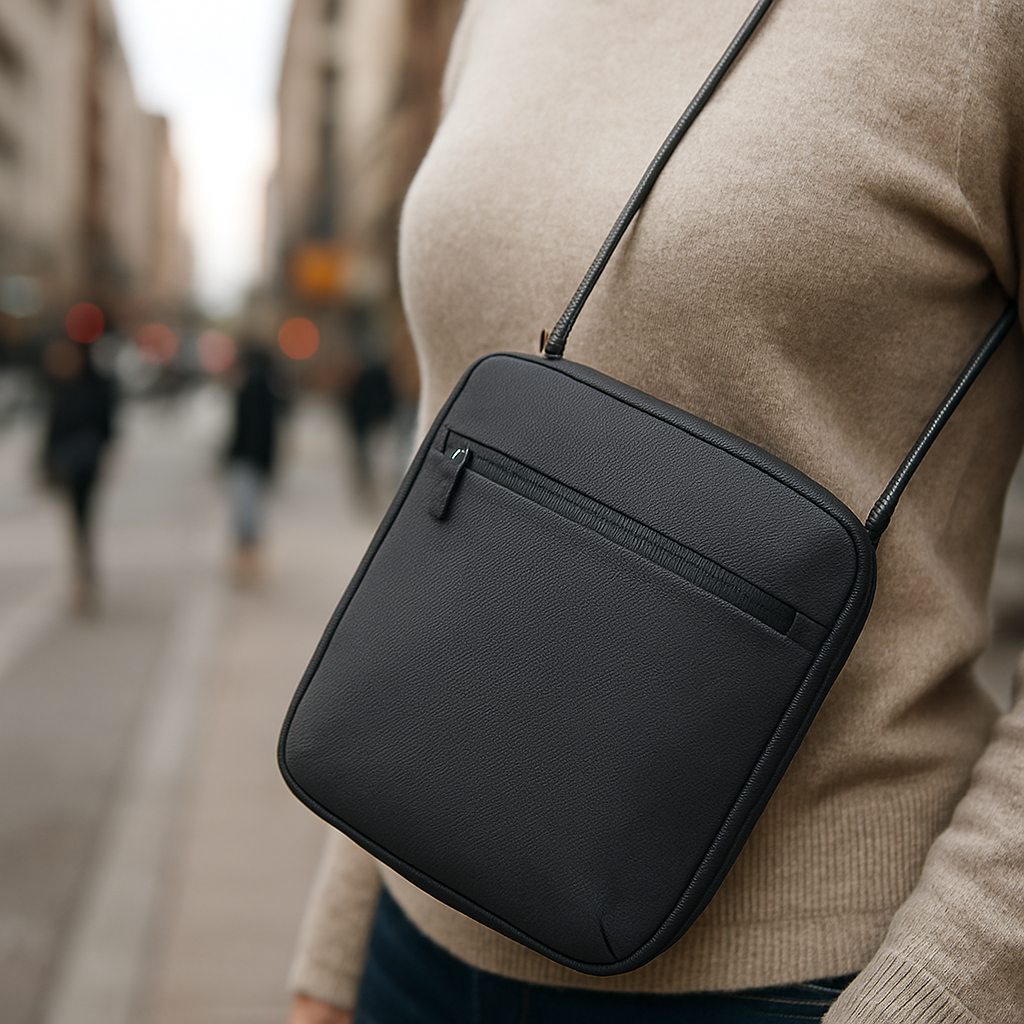
Alright, you’ve nailed the security‑need list – now it’s time to see if the bag’s built like a tank or a paper sack. Material and construction are the backbone of any anti theft crossbody bag for women. If the fabric gives way, all the clever zip tricks mean nothing.
Feel the Fabric, Not Just the Look
First thing’s first: run your fingers over the surface. A genuine slash‑proof material feels a bit textured, almost like fine sandpaper, because it’s usually a Kevlar‑blend or a heavy‑duty nylon. Cheap polyester will glide silky‑smooth and can be sliced with kitchen scissors in seconds.
Quick test: grab a pair of kitchen scissors and try to cut a corner. If the blade slides cleanly, walk away – that bag won’t stand up to a determined pickpocket with a tiny blade.
Stitching That Stands Up to the Grind
Look at the seams. Double‑stitched, reinforced stitching is a must. Single‑needle seams can burst under a tug. Many brands reinforce high‑stress points – the strap attachment, the base of the bag, and the corners – with bar‑tack stitching. That extra thread density is what keeps the bag from ripping when you yank it onto a crowded bus.
Real‑world example: a frequent commuter in Berlin told us that a bag with bar‑tack stitching on the strap loops survived a sudden jolt when the train slammed into a station – the strap didn’t rip, and the bag stayed put.
Hidden Zippers and Lockable Pulls
Next, examine the zippers. Are they concealed behind a flap or a leather overlay? Hidden zippers are less likely to be snatched by a pickpocket because there’s no obvious opening to grab. Lockable pulls (those that click into place) add another layer of deterrence.
One shopper on Facebook shared a story about a bag where the main zip was exposed. A pickpocket managed to slip a finger under the zipper tooth and pry it open. She switched to a model with a concealed zip and never had that problem again.
RFID‑Blocking Pocket Construction
If the bag boasts an RFID‑blocking pocket, check how it’s built. A thin metallic layer sandwiched between fabric layers is ideal – it won’t add bulk but will block radio waves. Make sure the pocket closes with a zip or a magnetic snap; an open pocket defeats the purpose.
In a recent discussion, a traveler compared two bags: one with a flimsy fabric pocket that barely covered the cards, and another with a fully lined RFID pocket that felt solid. She chose the latter and felt a lot safer when her passport was scanned at an airport.
Strap Design – More Than Just Comfort
The strap is where construction meets usability. Look for a strap that’s padded, adjustable, and secured with either a steel‑cable loop or a detachable wrist‑wrap. The steel cable is virtually cut‑proof, while the wrist‑wrap lets you tuck the strap under your arm when crowds get tight.
Here’s a tip: when you try the bag on, swing it gently. If the strap slides out of its loop or feels flimsy, it’s a red flag. A well‑made strap should feel sturdy even after a few minutes of movement.
Weight Matters Too
All that protection can add weight. A good anti‑theft bag should feel light enough to wear all day without shoulder fatigue. Test it by holding the bag at waist level – you should be able to lift it with one hand without straining.
Our community often recommends a bag that balances security and weight. For example, a traveler who trekked the streets of Marrakech chose a bag that weighed just under 800 g, yet still had Kevlar fabric, hidden zippers, and a steel‑cable strap.
Putting It All Together – Your Mini‑Checklist
- Slash‑proof fabric (Kevlar‑blend or heavy‑duty nylon)
- Double‑stitched, reinforced seams, especially at stress points
- Concealed, lockable zippers
- Fully lined RFID‑blocking pocket
- Steel‑cable or wrist‑wrap strap, padded and adjustable
- Weight under 1 kg for all‑day comfort
If you’re still unsure which bag checks every box, take a look at the discussion thread that many of our shoppers swear by: Best anti‑theft crossbody for July 2025 travel. It’s packed with real‑world experiences and links to models that meet these construction criteria.
Once you’ve verified the material and construction, you’re ready to move on to the next step: matching the bag to your style and budget. Trust the feel, trust the seams, and you’ll walk away with a bag that protects your essentials without weighing you down.
Step 3: Evaluate Design Features
Now that you’ve confirmed the material and construction, it’s time to dig into the actual design details that make an anti theft crossbody bag for women work in real life. This is where the rubber meets the road – you’ll see if the bag can actually protect you on a busy market street or a crowded train.
Cut‑resistant straps and loops
First thing most of us notice is the strap. Does it feel like a thin ribbon that could be sliced in one swipe, or does it have that sturdy, almost metallic feel? Look for a steel‑cable loop or a reinforced polymer core. In our experience, a strap with a visible cable or a padded, double‑stitched loop is far less likely to give way when someone tries to yank it.
Try this quick test: hold the bag at waist level and give the strap a firm tug. If the loop flexes but doesn’t snap, you’ve got a good candidate. And if the strap can be wrapped around your wrist, you’ll have that extra layer of security when you’re squeezed in a subway.
Hidden pockets and lockable zippers
Next, open the bag and hunt for the hidden compartments. A well‑designed anti theft crossbody bag for women will keep the main zip out of sight, usually behind a flap or a leather overlay. The zipper itself should have a lockable pull that clicks into place – that tiny click is the sound of a pickpocket’s nightmare.
When you run your fingers over the zipper teeth, you should feel a solid, metal‑to‑metal resistance. If the pull feels flimsy or the teeth are plastic, the zip is a weak point.
RFID‑blocking panels
Most modern passports and credit cards have RFID chips. A thin metallic layer sandwiched inside a pocket does the trick without adding bulk. The panel should be fully enclosed with a zip or a magnetic snap; an open pocket defeats the purpose.
Imagine you’re at an airport gate, and someone tries to scan your passport from a distance. That metallic lining stops the signal dead in its tracks, giving you peace of mind while you wait for boarding.
Organizational layout
Design isn’t just about security – it’s also about how easily you can find what you need. Look for dedicated card slots, a passport sleeve, and a small zip pocket for cables or a pen. The best bags keep the most‑used items near the top, so you don’t have to dig around while standing in line.
One handy tip: count the number of compartments. If you see three or more clearly labeled sections, you’re likely looking at a bag that was designed with the commuter in mind.
Weight distribution and comfort
A bag that’s heavy on one side will tire your shoulder in minutes. Check how the weight sits when you wear it. The strap should sit snugly against your body, and the bag’s base should sit low enough to keep the center of gravity close to your spine.
Give it a spin – swing it gently from side to side. If the bag sways wildly, the strap attachment is probably weak. A well‑balanced design feels almost weightless once you’ve adjusted the strap.
Real‑world example
If you want to see these design features in action, take a look at Pacsafe’s crossbody collection. Their bags showcase slash‑resistant straps, lockable zippers, RFID‑blocking pockets, and thoughtful interior organization – exactly the kind of design checklist we’re talking about.
So, how do you turn this checklist into a buying decision? Grab a bag, run through the points above, and ask yourself: does it feel solid, organized, and comfortable? If you can answer “yes” to most of the questions, you’ve found a bag that will protect your essentials without turning your day into a workout.
Ready to test a bag in person? Head to your favourite online store, filter by “anti theft” features, and use this design‑feature checklist as your secret weapon. You’ll walk away confident that your bag isn’t just pretty – it’s built to keep your stuff safe, every step of the way.
Step 4: Compare Prices and Warranty
Okay, you’ve narrowed down a handful of bags that tick the security boxes. Now the real question is – how much should you actually spend, and what kind of safety net does the brand give you if something goes wrong?
Set a realistic budget first
For most of our first‑time buyers, a sweet spot sits between €40 and €120. Below €40 you’ll often find fashion‑only pieces that lack cut‑proof fabric or lockable zippers. Above €120 you’re usually paying for brand cache rather than extra protection.
Ask yourself: am I looking for a bag that will survive daily commutes, or do I need a rugged travel companion for overseas adventures? The answer will help you decide whether to stretch a little for a premium strap or stick to the mid‑range.
Check the warranty – it’s your peace‑of‑mind guarantee
Many anti‑theft brands offer a one‑year warranty that covers stitching, zippers, and the cut‑resistant material. A longer warranty (two years or more) often signals confidence in the bag’s durability.
We’ve seen customers on Nina‑Bazaar return a bag within the first month because the strap loop started fraying – the warranty saved them a hassle and a few euros.
Return policy matters as much as the warranty
Look for free returns within 30 days. That gives you a chance to wear the bag around town, test the hidden pockets, and make sure the strap feels comfortable. If a retailer only offers a 14‑day window or charges restocking fees, you’re taking a gamble.
Compare price‑to‑feature ratios
Take a piece of paper (or a quick spreadsheet) and list the key security features you need: slash‑proof fabric, hidden zip, RFID pocket, steel‑cable strap. Next to each bag, tick off whether it includes those features. The bag that gives you the most ticks for the lowest price wins the day.
Here’s a quick cheat‑sheet you can copy‑paste into your notes:
| Factor | What to Look For | Why It Matters |
|---|---|---|
| Price Range | €40‑€120 for solid security features | Balancing cost with protection avoids over‑paying for style‑only bags. |
| Warranty Length | At least 1‑year manufacturer warranty | Covers stitching or zipper failures, saving future repair costs. |
| Return Policy | Free returns within 30 days | Lets you test fit and security without risk. |
Now that you have a framework, let’s talk about where to find reliable pricing info.
Use trusted retailers and compare side‑by‑side
Online marketplaces can be a price‑hunter’s nightmare. Instead, head to a few curated stores – Nina‑Bazaar, a reputable European retailer, and perhaps a dedicated travel‑gear site.
When you open a product page, scroll down to the “Specifications” section. If the price feels low but the warranty section is missing, that’s a red flag.
Don’t forget to factor in shipping and taxes
Some sites advertise a rock‑bottom price, then tack on hefty shipping fees for EU customers. Add those costs to your spreadsheet before you declare a winner.
And yes, if you’re ordering from outside the EU, check the import duty – it can turn a €80 bag into a €120 surprise.
External benchmark – see what a leading brand offers
For a concrete example of how price aligns with features, check out the Pacsafe anti‑theft crossbody collection. Their mid‑range models sit right around €90, include a five‑year warranty, and come with free returns in many European markets.
Seeing a reputable brand’s pricing can help you gauge whether a Nina‑Bazaar listing is a bargain or a potential pitfall.
Final quick‑check before you click “Buy”
- Is the price within your budget range?
- Does the bag carry at least a 1‑year warranty?
- Can you return it for free within 30 days?
- Do the listed security features match your checklist?
If you can answer “yes” to all four, you’ve likely found a solid deal. If any answer feels shaky, keep hunting – the right bag is out there, and a little extra research now saves you headaches later.
Happy hunting, and may your next anti‑theft crossbody bag be both affordable and rock‑solid!
Step 5: Choose the Right Style for Your Lifestyle
Now that you’ve nailed the security checklist, it’s time to think about how the bag fits into your everyday vibe. A bag can be a security tool, but it’s also part of your style story. If the look feels off, you’ll end up leaving it on a hook at home – and that defeats the whole point.
Start by answering a simple question: where do you spend most of your day? Are you commuting on a packed metro, hopping between cafés, or exploring weekend markets? Each scenario pulls a different aesthetic and functional need.
For the urban commuter, a sleek, minimal‑profile bag in matte black or charcoal works wonders. Look for a streamlined silhouette that slides under a blazer without adding bulk. The strap should sit close to the body, and a hidden zip keeps the line clean. In our experience, first‑time buyers love the confidence of a low‑key design that still screams “I’m protected.”
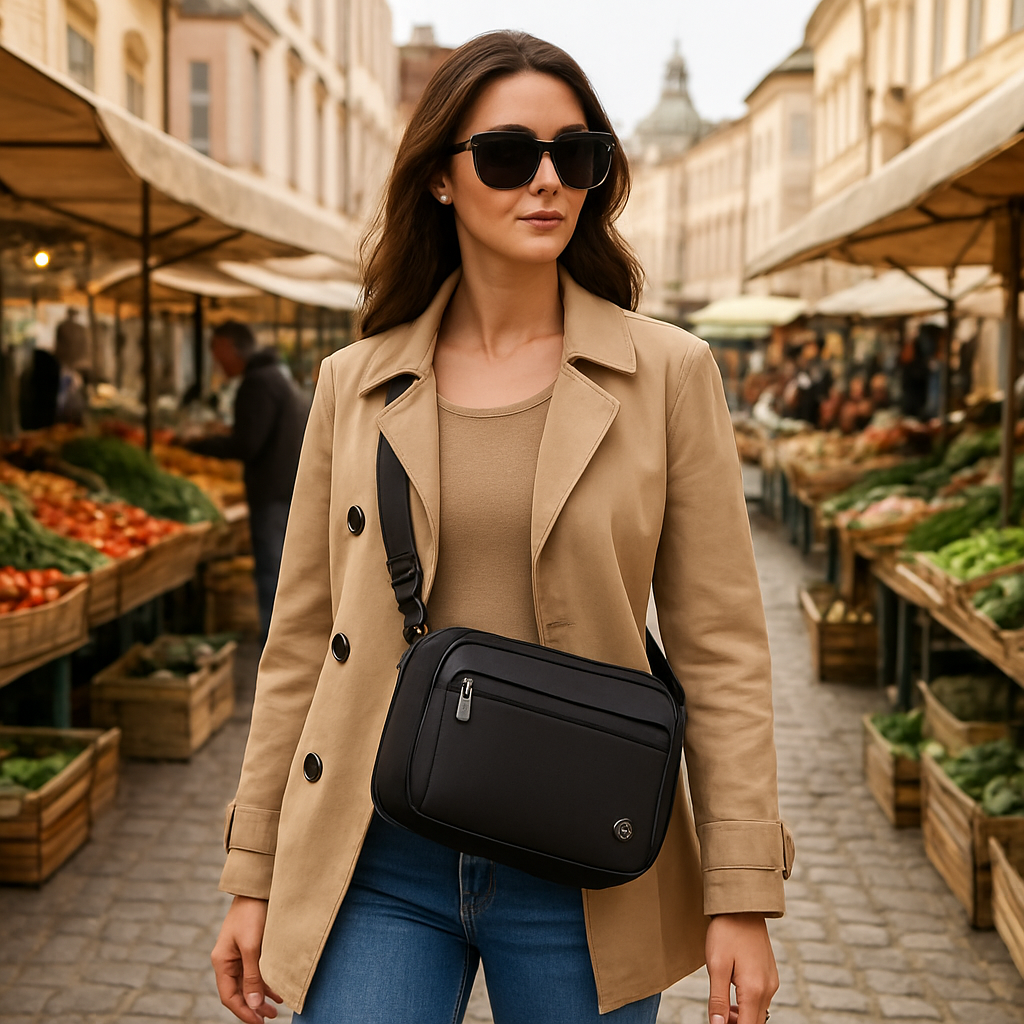
If you’re more of a weekend wanderer, you might gravitate toward a slightly larger canvas or soft‑leather piece with subtle colour pops – think muted olive, navy, or even a gentle terracotta. These bags often include extra interior pockets for a water bottle or a compact travel guide, which is handy when you’re on foot all day. The key is to keep the security features front‑and‑center: reinforced stitching, slash‑proof straps, and the lockable zip should still be there, even if the bag looks more relaxed.
Now, let’s talk about outfit coordination. You don’t need to match your bag to every top, but choosing a colour palette that complements your wardrobe saves you from the “what‑to‑wear” scramble each morning. Neutral tones are the safest bet, and you can add personality with a patterned strap or a detachable fringe that you can swap out. A quick trick: lay the bag next to your favorite jacket and see if the fabrics clash or harmonise.
Real‑world example: Sofia, a regular Nina‑Bazaar shopper from Berlin, works in a co‑working space and rides the U‑Bahn daily. She opted for a black kevlar‑blend crossbody with a discreet magnetic snap. The bag’s slim profile lets her tuck it under her blazer, while the hidden pocket holds her RFID‑blocked passport. She told us she no longer worries about pickpockets on the train, and she even gets compliments on the sleek look.
Another scenario: Lucas, a freelance photographer who travels to outdoor festivals, prefers a water‑resistant canvas bag in dark olive. He needs quick access to a small camera and spare batteries, so the bag’s front zip is positioned low and can be opened with one hand. The strap loops around his wrist, preventing it from swinging too far when he’s moving through crowds. He appreciates that the bag still meets the anti‑theft criteria while looking rugged enough for a festival vibe.
So how do you translate these stories into a personal decision? Follow these three actionable steps:
- Map your day. Write out a typical day, noting where you’ll be, how much you’ll be moving, and what you’ll be carrying. Highlight moments where you’re most exposed – e.g., crowded train, market stall, café line.
- Pick a style bucket. Based on your day map, choose one of three buckets: (a) Minimal commuter – slim, matte, hidden zip; (b) Casual explorer – relaxed canvas/leather, extra pocket, colour accent; (c) Hybrid – mid‑size, versatile colour, removable strap.
- Test before you buy. Use Nina‑Bazaar’s filter tools to narrow down to bags that match your bucket, then order a “try‑on” size if the retailer offers free returns. Wear it around your house for a day, swing it on and off, and see if the strap feels secure. If anything feels off, return within the 30‑day window and try another style.
Pro tip: many shoppers overlook the strap adjustment mechanism. A quick‑release buckle lets you switch from cross‑body to a wrist‑wrap in seconds – perfect for when you transition from a train ride to a bustling market. If the bag you like doesn’t have that, consider adding a small clip you can keep in a pocket; it’s a cheap hack that adds extra security. Can anyone give me a suggestion on a cross body bag? I'm using it …
Don’t forget the finishing touches. A lightweight keychain, a fabric‑covered water bottle, or a slim reusable tote can sit in the secondary pocket without compromising the bag’s profile. These accessories keep your essentials tidy and make the whole ensemble feel intentional.
Below is a quick visual checklist you can print out and stick on your fridge:
- Primary use (commute, travel, leisure)
- Preferred material (kevlar‑blend, canvas, leather)
- Colour palette (neutral, accent)
- Strap style (fixed, wrist‑wrap, detachable)
- Extra pockets you need
Finally, remember that style is personal, but safety isn’t. Marry the two by choosing a bag that looks like it belongs in your closet and feels like a fortress when you need it.
FAQ
What makes a bag truly anti‑theft?
It’s the combination of slash‑proof fabric, reinforced stitching, and smart closures. Look for Kevlar‑blend or heavy‑duty nylon that feels a little gritty, double‑stitched seams at stress points, and a lockable zipper hidden behind a flap. A steel‑cable loop or detachable wrist‑wrap on the strap adds a physical barrier that pickpockets can’t easily cut.
Do I really need RFID blocking?
If you travel often or use contactless cards, yes. RFID‑blocking pockets contain a thin metallic layer that stops thieves from scanning your passport or credit cards from a distance. The layer is usually sandwiched between fabric layers, so it doesn’t add bulk. A bag without it leaves your data exposed, especially in busy airports.
How can I tell if the strap is cut‑proof?
Run your fingers along the strap; a solid, woven core or a visible steel cable feels firm, not flimsy. Pull it sharply – it should resist snapping and the loop should stay in place. If the strap has a quick‑release buckle, test that the latch clicks securely. A genuine cut‑proof strap will still feel comfortable against your skin.
Is a hidden zip better than a regular zip?
Hidden zippers are less inviting to a thief because there’s no obvious opening to grab. They’re usually tucked behind a leather flap or a fabric overlay, and the pull often locks into place. A regular exposed zip can be pried open with a fingernail, so for everyday security a concealed zip is the safer bet.
Can I use an anti‑theft bag for everyday commuting?
Absolutely. The same features that protect you on a market stall work on a crowded metro. Choose a slim profile that slides under a blazer or fits comfortably against your torso. Keep the weight under 1 kg so your shoulder doesn’t fatigue, and make sure the strap stays close to your body for added control.
What should I look for in a warranty or return policy?
At least a one‑year manufacturer warranty covering stitching, zippers, and the cut‑resistant material shows confidence in durability. Pair that with a free‑return window of 30 days so you can test the bag at home or on a short walk. If the strap frays or a zipper fails early, you’ll be able to swap it without extra cost.
How do I keep my anti‑theft bag lightweight without sacrificing security?
Focus on materials: Kevlar‑blend fabrics give high protection with low weight. Skip bulky leather shells and opt for minimalist interiors – a few dedicated card slots, a single RFID pocket, and a compact zip compartment. Trim any unnecessary decorative hardware; every gram saved helps you wear the bag all day without feeling like you’re carrying a brick.
Conclusion
We've walked through everything from fabric feel to strap security, so you know exactly what to hunt for.
Remember, the core of a solid anti theft crossbody bag for women is slash‑proof material, hidden zippers and a sturdy strap that stays glued to your body.
If you can run a quick scissor test and hear that click on a lockable pull, you're already ahead of most pickpockets.
Weight matters too – aim for under 1 kg so you can wear it all day without shoulder fatigue.
Warranty and return policies are your safety net; a one‑year warranty and a 30‑day free return give you peace of mind.
For first‑time buyers, start with the checklist we laid out and filter on Nina‑Bazaar by those exact features.
Seasoned shoppers can fine‑tune the style bucket – minimalist commuter, casual explorer, or hybrid – to match their wardrobe.
And if you ever feel unsure, give the bag a test run around your house before you commit.
So, what’s the next step? Grab a few contenders, compare the tick‑boxes, and let the one that feels both light and tough earn a spot in your daily routine.
When you finally pick the right bag, you’ll notice the confidence boost that comes from knowing your essentials are safe.
Happy hunting, and may your new anti theft crossbody bag for women become the quiet hero of every commute and adventure.


